


Our work, our commitment:
A2M is an architectural firm operating at the intersection of architecture and research. We design regenerative architecture for people and the planet, integrating science, art, and technology. Drawing on 24 years of experience, we demonstrate that it is possible not only to limit our impact on the environment but also to regenerate it.
By 2015, it had already been 12 years since we completed our first project to passive house standards, and 8 years since we made the commitment to undertake only 100% passive house projects, without exception, whether new constructions or renovations, across all types of usage. Additionally, it had been 4 years since the principles of circularity and reuse began to emerge in our Brussels region. It was also at this time that the “Passive House Law” – which we helped to pass – came into effect, mandating passive house standards for all urban planning permits (for both new builds and renovations). This achievement marked a world premiere. We realized, however, that if everyone was required to meet passive house standards, this might no longer be the ultimate goal but rather a starting point, leading us to consider how we could push further. But further towards what?
Simultaneously, we were invited to participate in a significant design competition (RFP) for a neighborhood project in Paris (3,659,000 ft²) as part of the “Reinventing Paris II” program. We pondered what more we could contribute beyond the passive house standards established in Brussels and the integration of circularity. Given the project’s size and its potential impact on the surrounding area, we proposed: why not develop a project that not only limits its environmental impact but actively regenerates it, thereby improving the environmental conditions of the area? Our approach was still quite intuitive. By the end of that year, 196 countries had formally adopted the Paris Agreement on climate change.
That same year, we gradually began implementing parametric design (for the passive house Embassy of Belgium in Kinshasa and for a zero-energy hotel in Brussels) and inverted our creative process. Rather than simply using passive house design and simulation tools to evaluate projects, we transformed them into creative instruments to explore new architectural narratives. These tools enabled iterative processes that ultimately shaped the architecture of the projects. Working in a tropical climate and discovering ways to achieve passive design in such challenging environments proved enlightening. Indeed, it became evident that passive house design could be achieved everywhere, in any climate and under even more extreme conditions. As basic principles related to passive house standards – embodied carbon, circularity, carbon neutrality, re-greening, and water cycle management – became foundational, we increasingly incorporated the regenerative aspect into our competitions.
Recently, much like everyone else, we have witnessed several large-scale events unfolding sooner than expected: a shortage of natural materials such as timber just before the global health crisis, the doubling of raw materials like steel and aluminum in 2021, spiraling energy procurement costs exacerbated by the war crises in Ukraine and Israel, and an unprecedented acceleration of climate anomalies.
A year ago, we started drafting our monograph for Archistorm, a Paris-based publisher. Due for publication in late 2025, it will also serve as a manifesto.
Indeed, as we draft this document, two media outlets, the TED conference by Professor Johan Rockström of the Stockholm Resilience Centre titled “The Tipping Points of Climate Change — and Where We Stand” from August 19, 2024, and the report “Climate Change: Why It’s Worse Than Expected” from the independent online media BLAST, published on September 9, 2024, present the most objective and recent scientific evaluation of the planet’s condition. We are now almost halfway through the decade of the 2020s, widely considered the most critical period for combating climate change – a time in which our choices will determine the future of all generations on Earth and ultimately decide the fate of humanity, according to, among others, Australian climatologist Joëlle Gergis, a lead author of the latest IPCC assessment. Some even refer to our generation as “the last generation” capable of preventing a climate and societal collapse (see https://derniererenovation.fr/).
It is evident that changes have occurred more rapidly than expected. We find ourselves in a situation where, despite years of warnings and futile alarms raised, we (the scientists) have underestimated the risks. The abrupt changes recently observed on Earth exceed scientists’ realistic projections. Our generation has witnessed the crossing of six of the nine critical planetary boundaries necessary to maintain the stability and resilience of the Earth’s system – a concept developed in 2009 by an international team of twenty-six researchers, including Professor Johan Rockström). The Earth is no longer a safe operational space for humanity. We find ourselves, impotently, exiting what is termed the “living corridor” that has sustained us since the Holocene (12,000 years). In 2023, global warming reached 1.48°C. The goal of remaining below 1.5°C is now out of reach, and we are heading towards a planet that could warm by 3°C or even 4°C. The water cycle as we know it has ceased to exist (refer to the book “Water: Fake or Not” by Charlène Descollonges and Isabelle Brokman, published in 2023). The energy transition is an illusion: energies are accumulating rather than replacing one another (see “Without Transition” by Jean-Baptiste Fressoz, published in 2024, and the publication “Climate: Decarbonizing the Autonomy Sector” from September 2023 by The Shift Project and Jean-Marc Jancovici).
As noted by Professor and engineer E. Naboli in his 2019 publication “Regenerative Design in Digital Practice”, it has become definitively clear that sustainable development, as defined in the 1987 Brundtland Report (officially titled “Our Common Future”), is no longer sufficient. It has insidiously become an oxymoron. For decades, the construction, architecture, and urban development sectors, often operating beyond resource limits, have primarily focused on satisfying specific needs such as aesthetics, functionality, fixed levels of comfort, and cost efficiency. As a result, we can no longer afford to merely reduce our impact on the environment: we must transcend this and aim to regenerate it.
This brings us to the definition of regenerative design, which seeks to achieve positive impacts on the environments in which we live, influencing various aspects of our surroundings – such as climate, water, biodiversity, and CO2 emissions – in a beneficial way. The question remains: how can we, as architects and urban planners, achieve this?
Building upon Professor Naboli’s work and reflecting on our experiences throughout the development of our projects and our exploration of this new paradigm, we have established our framework within the structure of regenerative design, based on three fundamental pillars:
design with climate (including energy),
design with nature (encompassing embodied carbon and circularity),
and design with people (including salutogenesis).
From ‘Less Bad to More Good’: Transforming Environmental Impacts (Damages) into Positive Outcomes (adapted from E. Naboli)
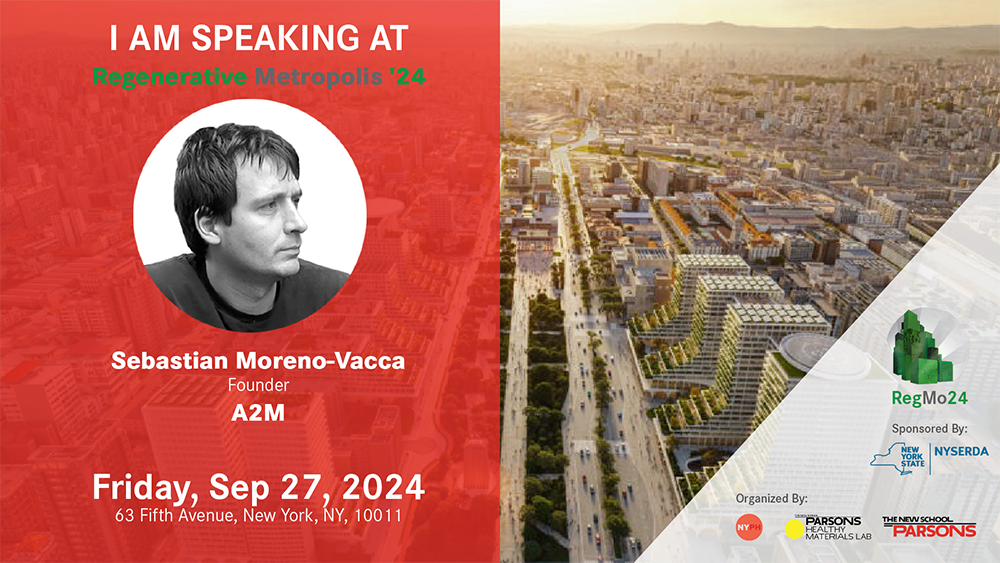
Meet Us at Regenerative Metropolis ’24
DATE: Friday, September 27, 2024
TIME: 9:00 A.M. – 7:00 P.M. (EST) – Door opens at 8:45 A.M.
VENUE: Starr Foundation, 63 Fifth Avenue, New York, NY, 10011
2:30 P.M. – 3:30 P.M. | Urban Projects
Como Betzoid Portugal Analisa Tendências de Depósitos Baixos
A análise de tendências de depósitos baixos no mercado português de jogos online representa um campo de estudo complexo e em constante evolução. A Betzoid Portugal tem desenvolvido metodologias sofisticadas para compreender os padrões comportamentais dos utilizadores que optam por investimentos iniciais reduzidos, estabelecendo-se como uma referência na interpretação destes dados cruciais para o setor.
Metodologia de Análise de Dados da Betzoid Portugal
A Betzoid Portugal emprega uma abordagem multifacetada na análise de tendências de depósitos baixos, combinando técnicas estatísticas avançadas com análise comportamental. O processo inicia-se com a recolha sistemática de dados transacionais, que são posteriormente categorizados por valor, frequência e perfil demográfico dos utilizadores.
A empresa utiliza algoritmos de machine learning para identificar padrões sazonais e correlações entre diferentes variáveis. Estes modelos preditivos permitem antever flutuações na procura por opções de depósito reduzido, especialmente durante períodos específicos do ano como o início de cada mês ou épocas festivas.
Um aspeto fundamental da metodologia consiste na segmentação de utilizadores por comportamento de depósito. A análise revela que aproximadamente 35% dos novos utilizadores preferem iniciar com valores inferiores a 10 euros, demonstrando uma tendência clara para a experimentação cautelosa antes de investimentos mais significativos.
A Betzoid Portugal também implementa ferramentas de análise em tempo real que monitorizam as flutuações diárias nos padrões de depósito. Esta abordagem permite identificar anomalias e tendências emergentes com maior precisão, contribuindo para uma compreensão mais profunda do mercado português.
Tendências Históricas e Evolução do Mercado
Desde 2015, o mercado português de jogos online tem testemunhado uma transformação significativa nos padrões de depósito. A Betzoid Portugal documenta que o valor médio dos depósitos iniciais diminuiu consistentemente, passando de uma média de 25 euros em 2016 para aproximadamente 12 euros em 2023.
Esta tendência reflete uma mudança fundamental no comportamento dos consumidores portugueses, que demonstram crescente prudência financeira e preferência por experiências de baixo risco. A análise histórica revela que os depósitos baixos não apenas aumentaram em frequência, mas também em diversidade, com utilizadores explorando múltiplas plataformas antes de se comprometerem com valores superiores.
A regulamentação do setor em Portugal, implementada em 2015, contribuiu significativamente para esta evolução. A Betzoid Portugal observa que a introdução de medidas de proteção ao consumidor e limites de depósito incentivou uma abordagem mais conservadora, particularmente entre utilizadores com idades compreendidas entre os 25 e 40 anos.
Durante o período da pandemia COVID-19, registou-se um aumento de 45% nos depósitos baixos, com muitos utilizadores procurando entretenimento acessível durante os confinamentos. Esta tendência manteve-se parcialmente após o período pandémico, sugerindo uma alteração permanente nos hábitos de consumo.
A análise geográfica revela disparidades regionais interessantes, com as regiões do Norte e Centro de Portugal apresentando maior propensão para depósitos baixos comparativamente com Lisboa e Porto, onde os valores médios tendem a ser superiores.
Fatores Socioeconómicos e Comportamentais
A Betzoid Portugal identifica múltiplos fatores que influenciam a preferência por depósitos baixos no mercado português. O contexto socioeconómico desempenha um papel determinante, com a análise demonstrando correlações diretas entre indicadores económicos nacionais e padrões de depósito.
A investigação revela que períodos de incerteza económica, como a crise financeira de 2008 e mais recentemente a inflação pós-pandemia, correspondem a aumentos significativos na procura por opções de baixo investimento. Os utilizadores portugueses demonstram particular sensibilidade a flutuações no custo de vida, ajustando rapidamente os seus hábitos de entretenimento digital.
O perfil demográfico dos utilizadores de depósitos baixos apresenta características específicas. A faixa etária entre 18 e 35 anos representa 60% deste segmento, com predominância de utilizadores com formação superior e rendimentos médios. Curiosamente, as apostas com depósito 3€ tornaram-se particularmente populares entre estudantes universitários e jovens profissionais que procuram entretenimento acessível sem comprometer a estabilidade financeira.
A análise comportamental indica que utilizadores de depósitos baixos tendem a ser mais ativos em termos de frequência de utilização, compensando o menor valor individual com maior engagement. Este padrão sugere uma abordagem estratégica ao entretenimento online, onde o controlo orçamental é prioritário.
A Betzoid Portugal também documenta a influência crescente das redes sociais na formação de preferências por depósitos baixos. Comunidades online dedicadas ao jogo responsável têm promovido estratégias de gestão de bankroll que favorecem investimentos iniciais reduzidos.
Tecnologia e Inovação na Análise de Tendências
A implementação de tecnologias avançadas constitui um pilar fundamental da abordagem analítica da Betzoid Portugal. A empresa desenvolveu sistemas proprietários de Business Intelligence que processam milhões de transações diárias, extraindo insights valiosos sobre comportamentos de depósito.
A utilização de inteligência artificial permite a identificação de padrões complexos que seriam imperceptíveis através de métodos tradicionais. Algoritmos de deep learning analisam não apenas valores e frequências, mas também sequências temporais, preferências de jogos e interações com interfaces digitais.
A Betzoid Portugal emprega também técnicas de análise preditiva para antecipar tendências futuras. Modelos estatísticos incorporam variáveis macroeconómicas, eventos sazonais e indicadores sociais para prever flutuações na procura por opções de depósito baixo com precisão superior a 85%.
O desenvolvimento de dashboards interativos permite aos analistas visualizar tendências em tempo real, facilitando a tomada de decisões estratégicas. Estas ferramentas integram dados de múltiplas fontes, incluindo transações, inquéritos de satisfação e métricas de engagement.
A empresa investe continuamente em tecnologias emergentes como blockchain para garantir transparência e segurança na recolha de dados. Esta abordagem inovadora posiciona a Betzoid Portugal na vanguarda da análise de mercado no setor português de jogos online.
A implementação de sistemas de alerta automático permite a deteção imediata de anomalias ou mudanças significativas nos padrões de depósito, garantindo uma resposta rápida a desenvolvimentos de mercado.
A análise de tendências de depósitos baixos pela Betzoid Portugal representa um exemplo paradigmático de como a tecnologia e a investigação científica podem ser aplicadas para compreender comportamentos complexos no mercado português. A combinação de metodologias rigorosas, análise histórica aprofundada e inovação tecnológica posiciona a empresa como líder na interpretação destas dinâmicas fundamentais para o setor dos jogos online em Portugal.

Sebastian Moreno-Vacca – Founder | A2M
Sebastian Moreno-Vacca is an architect and the founding member of A2M. His firm designs regenerative architecture for people and for the planet, operating at the crossroads of science, art, and technology, demonstrating for years that we can not only limit our impact on the environment but go beyond, to the point of regenerating it Since starting A2M in 2000, Sebastian has led it to international recognition through his knowledge-building in sustainable practices and his long tenure as president of the Board of the Belgian Passive House Association. Since 2006, he has also taught architecture at ULB University in Brussels. In 2009, he co-founded and edited the quarterly magazine ‘be.passive’. In 2015 he helped Brussels to become the first region in world to adopt Passivehouse as the norm for all new build and retrofit. For over 18 years, he has been a regular lecturer for several professional networks (architects, engineers, builders and developers), offering an extensive set of presentations, conferences and training all over the world. A2M is headquartered in Brussels and has offices in Luxembourg and in New York through its sister company, M2A.

about
A2M is an architecture agency created in 2000, which specializes in the field of the environment, research and the creation of exemplary projects. Over the years, after more than 90 projects, the agency has built a reputation as a pioneer in the field of sustainable architecture by exclusively developing Passive House, sustainable, circular, zero energy, CO2 neutral or self-sufficient buildings.
This attitude leads us to explore the realities of a decarbonized world, responding to the challenges of tomorrow. Some of our projects go even further: not only do they limit their impact on the environment, but they also regenerate it.
One of the particularities of the agency is the integration of several disciplines of building physics and environmental studies (energy studies, thermal and natural light comfort, choice of materials, biodiversity, water management, life cycle analysis, TCO, LCA, carbon footprint, etc.), as well as parametric design, so as to recreate an architectural narrative, to respond to the new performances needs of a changing world. A2M has its own Think Tank in which it develops the « Data Driven Architecture » with architectural narrative development tools assisted by AI ChatGPT or Copilot for the coding of certain scripts in Python and C#. Augmented Reality on construction site complements BIM and VR.
Teaching and transmission are also part of this transversal vision. Sebastian Moreno-Vacca, founder of A2M, and Aline Branders, partner of A2M, have been teaching at the ULB faculty of architecture and giving regular conferences for more than 15 years. A2M has offices in Brussels, New York, Luxembourg and Lisbon
an extensive set of presentations, conferences and training all over the world. A2M is headquartered in Brussels and has offices in Luxembourg and in New York through its sister company, M2A.