

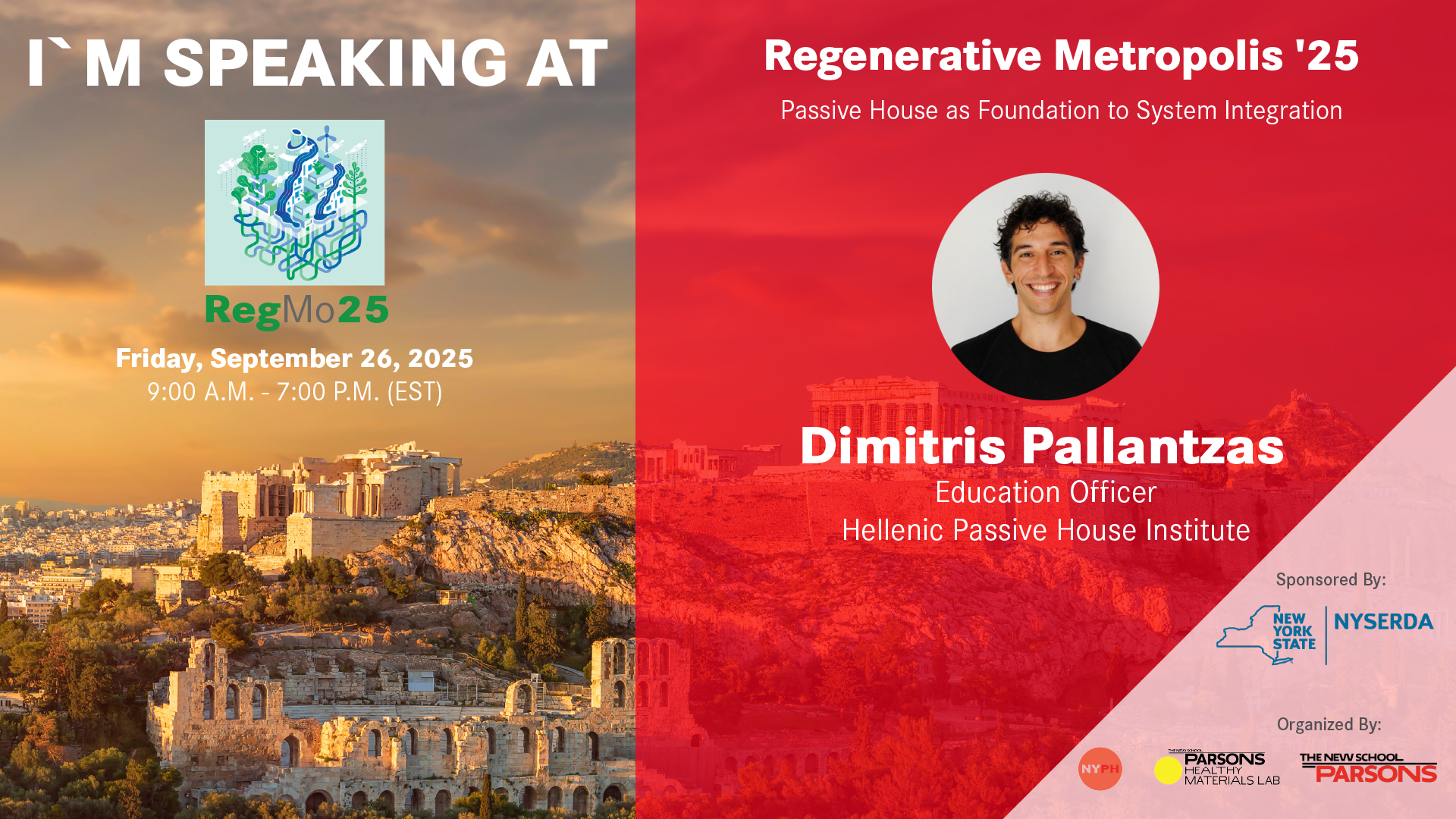
Talk Description
Metropolitan cities present the greatest challenge for advancing energy efficiency. Aging building stock, complex urban regulations, and the need for tenants to remain in place during renovations all create significant barriers. Using Athens, Greece, as a case study, this talk combines simulation-based analysis with real-world data to address crucial questions relevant to large cities worldwide.
Passivhaus offers a clear pathway forward, yet transforming an entire city at once is not feasible. Instead, this discussion will highlight common challenges, best practices, and decision-making tools to optimize action. Key strategies include prefabricated renovation methods, demand-response solutions, and setting clear energy and comfort targets such as Passivhaus standards. Beyond technical solutions, the societal dimension is critical: many urban residents face energy poverty and suffer from extreme heat or cold without adequate remedies.
The talk will feature “Passivistas: The Tavros Project”, an exemplary case study where an old refugee multifamily building was renovated to Passivhaus Premium, addressing social, economic, and environmental needs simultaneously.
Learning Objectives
-
Analyze a District Energy Balance Simulation and its role in urban-scale planning
-
Understand energy model calibration using real-world field measurements
-
Explore policies and ESCO models that apply Passivhaus as a tool to combat energy poverty
-
Evaluate the integration of renewables, storage, and efficiency measures at the district scale
DATE: Friday, September 26, 2025
TIME: 9:00 A.M. – 7:00 P.M. (EST)
VENUE: University Center, 63 Fifth Avenue, New York NY, 10011
Sponsored by